

Performance and Control System | White Paper

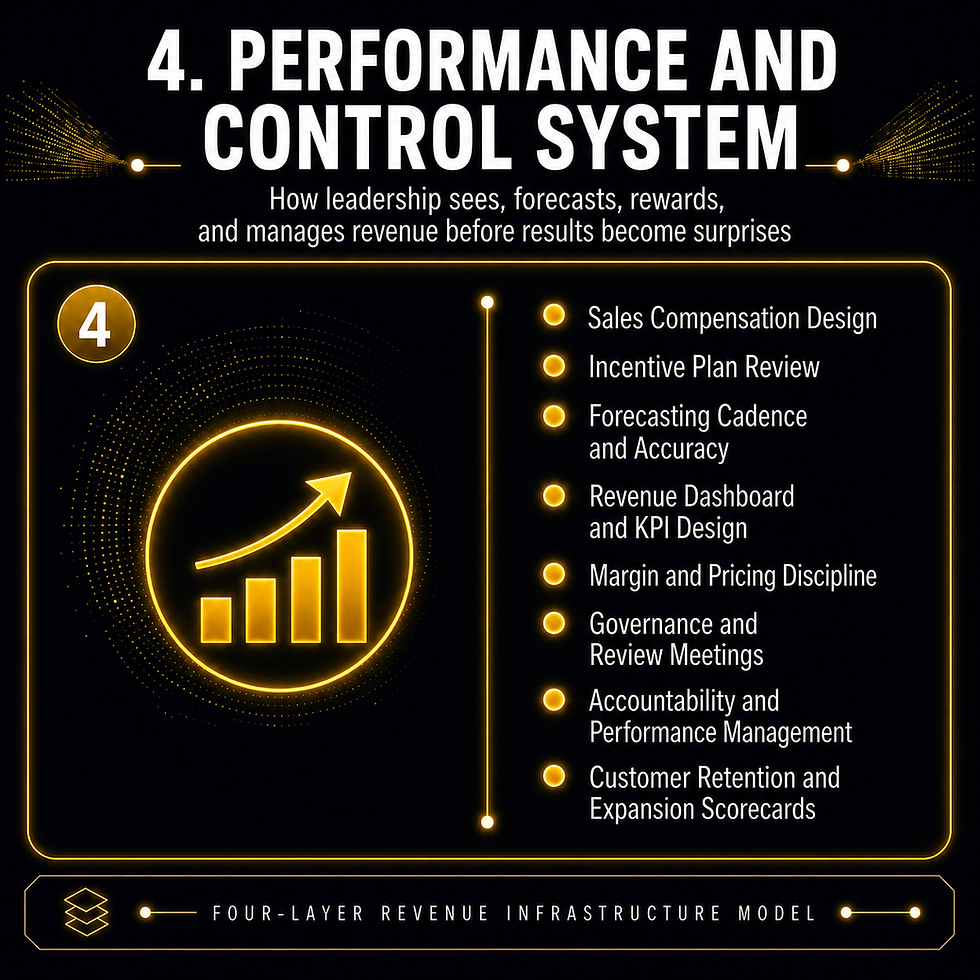
When compensation design and revenue visibility break down in a shared-account selling model
A national distributor of surveying equipment operated across Canada, serving large engineering and surveying firms with offices in multiple provinces. The company sold into an industry where product innovation regularly created new growth opportunities. As field technology improved, surveyors gained access to tools that made their work more efficient, reduced time spent in the field, and lowered the total hourly cost of surveying activity. Those advancements created strong commercial opportunity for the distributor, especially within larger multi-location accounts that could standardize equipment choices across regional operations.
On paper, the sales opportunity was significant. In practice, however, the company was facing a growing internal problem that leadership could not resolve with confidence.
Sales representatives across the country were each responsible for building business in their respective provinces. Many of the largest customers had a national structure: a head office in one province, supported by provincial offices in others. As a result, multiple sales representatives often touched the same customer account. A representative in one province might initiate the sale locally by working with the regional office, while another representative tied to the customer’s head office would also be involved in the broader account relationship.
Over time, this created increasing confusion for leadership around two core questions:
Who actually made the sale? Who should receive the commission?
The issue became particularly difficult because both sides of the picture seemed valid. The local provincial representative could point to the work done in creating demand, identifying opportunity, and advancing the deal in the regional office. At the same time, the representative connected to the customer’s head office could point to the fact that the final purchasing authority often sat centrally and that the sale would not have closed without head office engagement.
Leadership initially suspected that the company might simply be double counting revenue, or at the very least overpaying compensation because the same sale was being recognized by more than one representative. However, the reality proved to be more complex.
A Revenue Infrastructure Diagnostic was completed to assess the issue through the broader lens of the company’s selling model, compensation design, and revenue controls. The diagnostic confirmed that the existing Performance and Control System had a genuine weakness: the sales compensation program was, in effect, allowing double payment against the same commercial event.
However, the diagnostic also showed that the solution was not as simple as paying one rep and excluding the other.
After reviewing the actual sales process, it became clear that these were not standard one-owner transactions. They were enterprise sales operating through a group purchasing model. Local provincial offices often initiated the buying activity, surfaced the opportunity, or influenced the product consideration. But in many cases, the final purchasing authority rested with the head office. The sale was not created solely at the local level, nor solely at the head office level. It was the result of coordinated influence across multiple parts of the account.
That distinction mattered.
If leadership chose to pay only the provincial representative, the company risked discouraging the head office relationship work that was often essential to securing final approval. If leadership chose to pay only the head office representative, it risked suppressing the local sales activity that generated the opportunity in the first place. Either approach would have damaged the behavior the business actually needed.
This is where the issue moved beyond compensation mechanics and became a broader Performance and Control System problem.
The company did not simply need to stop overpaying. It needed a compensation model that reflected how enterprise revenue was truly being created, while also improving revenue visibility, controlling commission cost, and reinforcing the right selling behavior.
The solution was to redesign the compensation approach around a commission pool model.
Rather than allowing the same sale to generate separate, potentially duplicated commission outcomes, each qualifying enterprise sale was assigned a defined commission pool base amount. That pool represented the maximum commission cost attached to the sale. Contributing sales representatives associated with the account could then be paid from that pool based on their role in the opportunity.
This structure did several important things at once.
First, it established a clear ceiling on commission expense tied to each sale, which improved cost control and eliminated the risk of uncontrolled double payment.
Second, it reflected the true economics of the enterprise selling process, recognizing that more than one representative could make a legitimate contribution to the same account outcome.
Third, it encouraged the behavior leadership actually wanted: coordinated team selling across national accounts, rather than internal competition over who would claim the transaction.
Fourth, it improved management visibility. By clarifying how compensation should work in shared-account situations, the company gained a better understanding of how revenue was being generated, how account influence was distributed, and how its national sales resources were actually collaborating.
From a Revenue Infrastructure Model perspective, this issue sat most visibly inside the Performance and Control System, but its effects reached much further.
The compensation design problem created tension in the Revenue Execution System, because the sales process itself was not being matched by the compensation logic. It affected the Talent System, because unclear or unfair commission structures can quickly weaken morale, trust, and rep engagement. It also touched Market Alignment, because large enterprise customers increasingly required coordinated selling across multiple locations, and the company’s internal model had to match the complexity of the accounts it was pursuing.
In other words, the compensation issue was not just a payroll problem. It was a control-system problem with direct implications for behavior, collaboration, cost management, and revenue quality.
The 360 Revenue Infrastructure Diagnostic Report identified this gap as a high-priority Performance and Control System issue because it was undermining both financial discipline and sales behavior. Leadership needed a structure that controlled commission cost without weakening sales effort, and that is exactly what the redesigned model delivered.
This case illustrates an important principle: performance systems do more than measure or reward outcomes. They shape the behavior of the revenue organization. When compensation logic does not reflect how revenue is actually produced, it can create conflict, distort credit, reduce trust, and drive the wrong commercial behavior. When designed properly, however, the Performance and Control System can improve discipline, reinforce collaboration, and create much better control over the economics of growth.
Why this example matters
This is a strong example of why the Performance and Control System cannot be treated as an administrative back-end issue. In revenue organizations, compensation design, revenue visibility, crediting logic, and management controls directly influence how people sell, how accounts are managed, and how profitably growth is achieved.


Comments